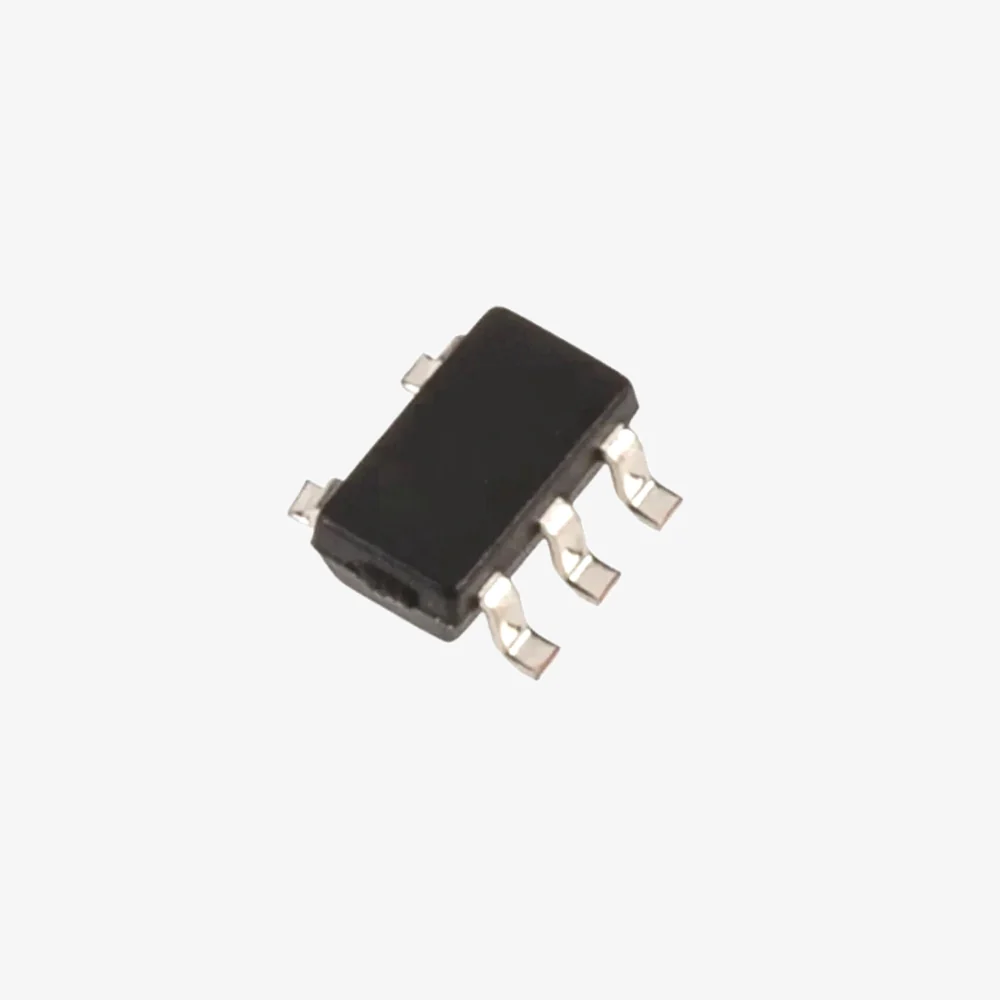
MAX1555 Lithium Ion/Polymer USB Battery Charger IC (Maxim) - SOT-23-5 SMD Package
The MAX1555 is a compact, high-efficiency battery charger IC designed for Lithium Ion or Lithium Polymer batteries. It is optimized for charging from USB power sources, providing a convenient and space-saving solution for battery-powered devices. The MAX1555 is housed in a SOT-23 SMD package, making it ideal for compact electronic designs.
Specifications:
- IC Type: Lithium Ion/Polymer Battery Charger
- Manufacturer: Maxim Integrated
- Package Type: SOT-23 SMD
- Package Size: 5 Pins
- Input Voltage Range: 4.35 V to 6 V (USB)
- Charge Current: Programmable up to 500 mA
- Charge Voltage: 4.2 V ± 1%
- Operating Temperature Range: -40°C to +85°C
Pin Configuration:
- IN: Input voltage
- GND: Ground
- CHRG: Charge status output
- PROG: Charge current program
- BAT: Battery voltage input/output
Features:
- USB-compatible input voltage range
- Programmable charge current up to 500 mA
- Integrated thermal regulation and overcurrent protection
- Charge status indicator
- Compact SOT-23 package for space-efficient designs
Applications:
- Portable electronics
- Handheld devices
- USB-powered rechargeable products
- Battery-powered gadgets
Package Includes:
1 x MAX1555 Lithium Ion/Polymer USB Battery Charger IC (SOT-23 SMD Package)
Note: Product images are for illustrative purposes only and may differ from the actual product.
The MAX1555 is a compact, high-efficiency battery charger IC designed for Lithium Ion or Lithium Polymer batteries. It is optimized for charging from USB power sources, providing a convenient and space-saving solution for battery-powered devices. The MAX1555 is housed in a SOT-23 SMD package, making it ideal for compact electronic designs.
Specifications:
- IC Type: Lithium Ion/Polymer Battery Charger
- Manufacturer: Maxim Integrated
- Package Type: SOT-23 SMD
- Package Size: 5 Pins
- Input Voltage Range: 4.35 V to 6 V (USB)
- Charge Current: Programmable up to 500 mA
- Charge Voltage: 4.2 V ± 1%
- Operating Temperature Range: -40°C to +85°C
Pin Configuration:
- IN: Input voltage
- GND: Ground
- CHRG: Charge status output
- PROG: Charge current program
- BAT: Battery voltage input/output
Features:
- USB-compatible input voltage range
- Programmable charge current up to 500 mA
- Integrated thermal regulation and overcurrent protection
- Charge status indicator
- Compact SOT-23 package for space-efficient designs
Applications:
- Portable electronics
- Handheld devices
- USB-powered rechargeable products
- Battery-powered gadgets
Package Includes:
1 x MAX1555 Lithium Ion/Polymer USB Battery Charger IC (SOT-23 SMD Package)
Note: Product images are for illustrative purposes only and may differ from the actual product.
Original: $1.38
-65%$1.38
$0.48Description
The MAX1555 is a compact, high-efficiency battery charger IC designed for Lithium Ion or Lithium Polymer batteries. It is optimized for charging from USB power sources, providing a convenient and space-saving solution for battery-powered devices. The MAX1555 is housed in a SOT-23 SMD package, making it ideal for compact electronic designs.
Specifications:
- IC Type: Lithium Ion/Polymer Battery Charger
- Manufacturer: Maxim Integrated
- Package Type: SOT-23 SMD
- Package Size: 5 Pins
- Input Voltage Range: 4.35 V to 6 V (USB)
- Charge Current: Programmable up to 500 mA
- Charge Voltage: 4.2 V ± 1%
- Operating Temperature Range: -40°C to +85°C
Pin Configuration:
- IN: Input voltage
- GND: Ground
- CHRG: Charge status output
- PROG: Charge current program
- BAT: Battery voltage input/output
Features:
- USB-compatible input voltage range
- Programmable charge current up to 500 mA
- Integrated thermal regulation and overcurrent protection
- Charge status indicator
- Compact SOT-23 package for space-efficient designs
Applications:
- Portable electronics
- Handheld devices
- USB-powered rechargeable products
- Battery-powered gadgets
Package Includes:
1 x MAX1555 Lithium Ion/Polymer USB Battery Charger IC (SOT-23 SMD Package)
Note: Product images are for illustrative purposes only and may differ from the actual product.